
Reimagining Education: Fostering Skills, Creativity, and Character Development
- doshzoeeduconsult
- Apr 9
- 3 min read

Education today faces a critical challenge. Traditional methods focus heavily on memorization and standardized testing, often overlooking the essential qualities that prepare students for real life. The conversation around education is shifting toward a more balanced approach that values skills, creativity, and character. This new perspective aims to equip learners not just with knowledge but with the tools to navigate an unpredictable future.
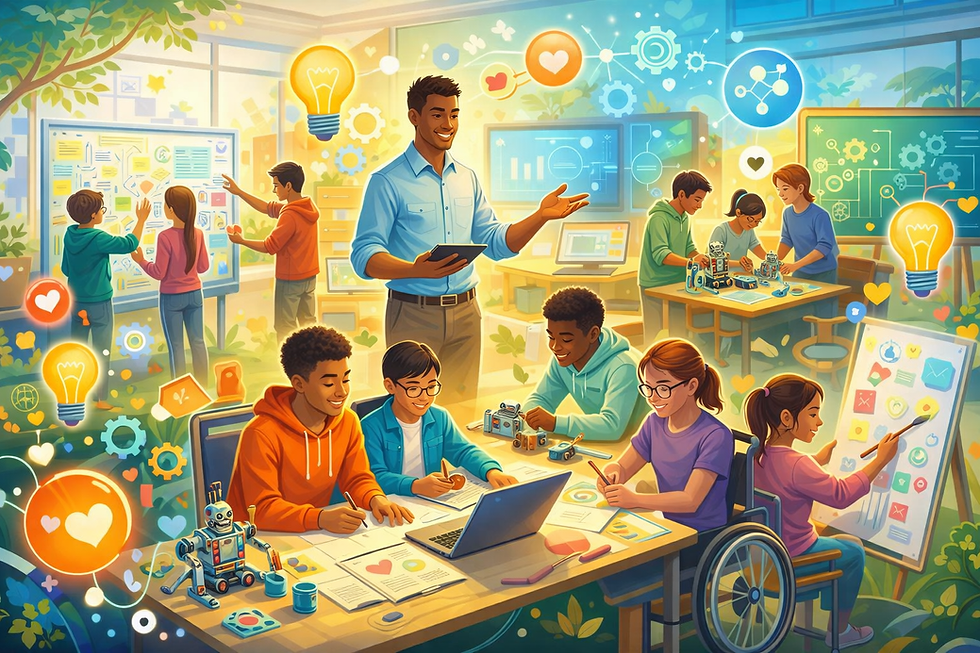
Why Skills Matter More Than Ever
The world is changing rapidly, and the skills needed to succeed are evolving. Technical knowledge alone no longer guarantees success. Instead, practical skills such as problem-solving, communication, and adaptability have become crucial.
Problem-solving helps students approach challenges logically and find effective solutions.
Communication skills enable clear expression of ideas and collaboration with others.
Adaptability prepares learners to adjust to new situations and technologies.
For example, Finland’s education system emphasizes these skills by encouraging students to work on projects that require teamwork and critical thinking. This approach has helped Finnish students consistently rank high in global education assessments.
Creativity as a Core Educational Goal
Creativity is often seen as a talent reserved for artists or inventors, but it is a vital skill for everyone. It drives innovation and helps students think beyond conventional boundaries.
Schools can nurture creativity by:
Encouraging open-ended questions rather than just right or wrong answers.
Integrating arts and sciences to allow cross-disciplinary thinking.
Providing opportunities for students to design their own projects.
One practical example is the use of maker spaces in schools. These are areas equipped with tools and materials where students can build, experiment, and create. This hands-on learning fosters curiosity and original thinking, which are essential for future careers.
Building Character Through Education
Character development is often overlooked in traditional education, yet it shapes how students interact with the world. Traits such as resilience, empathy, and integrity are fundamental for personal and professional success.
Schools can promote character by:
Creating a culture of respect and kindness.
Teaching students to manage emotions and resolve conflicts.
Encouraging responsibility through community service and leadership roles.
A notable example is the implementation of social-emotional learning (SEL) programs in many schools worldwide. These programs help students develop self-awareness and social skills, which improve both academic performance and relationships.
Integrating Skills, Creativity, and Character in the Classroom
The most effective education systems combine these three elements rather than treating them separately. This integration creates a holistic learning experience that prepares students for life beyond school.
Teachers can:
Design lessons that require critical thinking and creative problem-solving.
Use group activities to build communication and empathy.
Include reflection exercises that encourage students to consider their values and goals.
For instance, project-based learning (PBL) is a method that naturally blends skills, creativity, and character. Students work on real-world problems, collaborate with peers, and reflect on their learning process. This approach has shown positive results in engagement and knowledge retention.
The Role of Technology in Supporting the New Education Conversation
Technology can support this shift by providing personalized learning experiences and access to diverse resources. Digital tools allow students to explore topics creatively and develop skills at their own pace.
Examples include:
Interactive simulations that teach complex concepts through experimentation.
Platforms for collaborative projects connecting students across different locations.
Apps that promote mindfulness and emotional regulation.
However, technology should complement, not replace, human interaction and mentorship, which are vital for character development.
Challenges and Opportunities Ahead
Changing education systems is not without challenges. Teachers need training to adopt new methods, and curricula must be redesigned to balance knowledge with skills and character. There is also a need for assessment methods that capture these broader goals.
Despite these hurdles, the opportunity to create more meaningful and effective education is within reach. Communities, educators, and policymakers can work together to build systems that prepare students for a complex world.
#ModernEducation #FutureOfEducation #EducationReform #InnovativeLearning #EducationTransformation #SkillDevelopment #21stCenturySkills #LearningByDoing #CriticalThinking #ProblemSolving #LifelongLearning #CreativeLearning #FosterCreativity #InnovationInEducation #ThinkCreatively #StudentInnovation #CharacterDevelopment #EmotionalIntelligence #GrowthMindset #StudentGrowth #HolisticEducation #StudentCenteredLearning #ActiveLearning #FacilitatorMindset #EngagedLearning #TeachingStrategies #EmpowerStudents #FutureReady #EducationMatters #LearningJourney #InspireLearning


Comments